
Have you ever wondered how we preserve and study the tiny, intricate tools used to print books centuries ago? At the heart of the Baskerville Project lies a fascinating technique called Reflectance Transformation Imaging (RTI) also known as Polynomial Texture Mapping (PTM), a digital method that lets us explore the surface of historic metal punches in stunning detail.
How It Works
To photograph a Baskerville punch using RTI, the object is placed inside a dome fitted with 50 evenly spaced lights. A camera captures 50 individual photographs, each taken with a different light source activated, highlighting the surface from various angles. These images are then processed using RelightLab software (successor of RTI Builder and RTI Viewer), which combines them into an interactive digital file. This file allows viewers to move a virtual light across the punch’s surface online, revealing fine details like engraving marks, wear, and texture that are otherwise invisible. These visualisations are significant because they preserve and expose the craftsmanship and history embedded in each punch, offering new insights for researchers and the public alike.
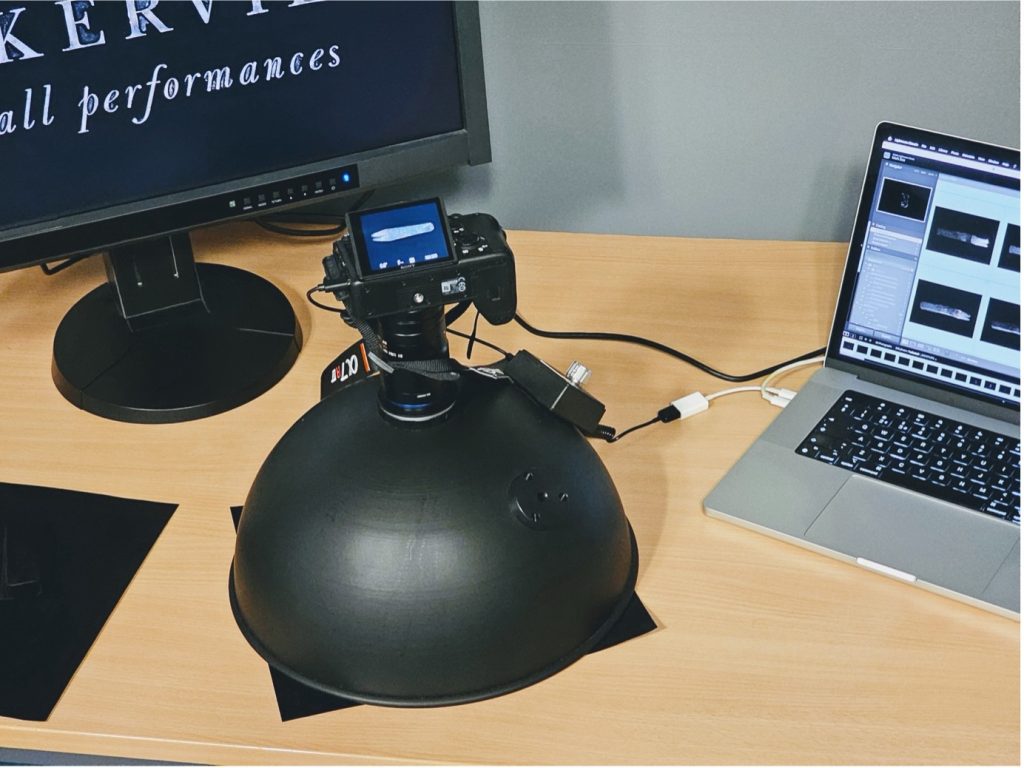
The RTI Dome and Its InnovatorThe RTI dome used in the Baskerville Project was designed by Tomasz Łojewski, a leading researcher in cultural heritage imaging. His work has advanced the application of Reflectance Transformation Imaging (RTI) for delicate historical materials, including books and paper-based artifacts. In his paper, Łojewski (2023) explores how RTI can uncover hidden details such as surface texture, inscriptions, and wear patterns that traditional photography often misses. More information about his RTI projects can be found on his official site (Łojewski, n.d.), and the full paper is available online.
Why RTI?
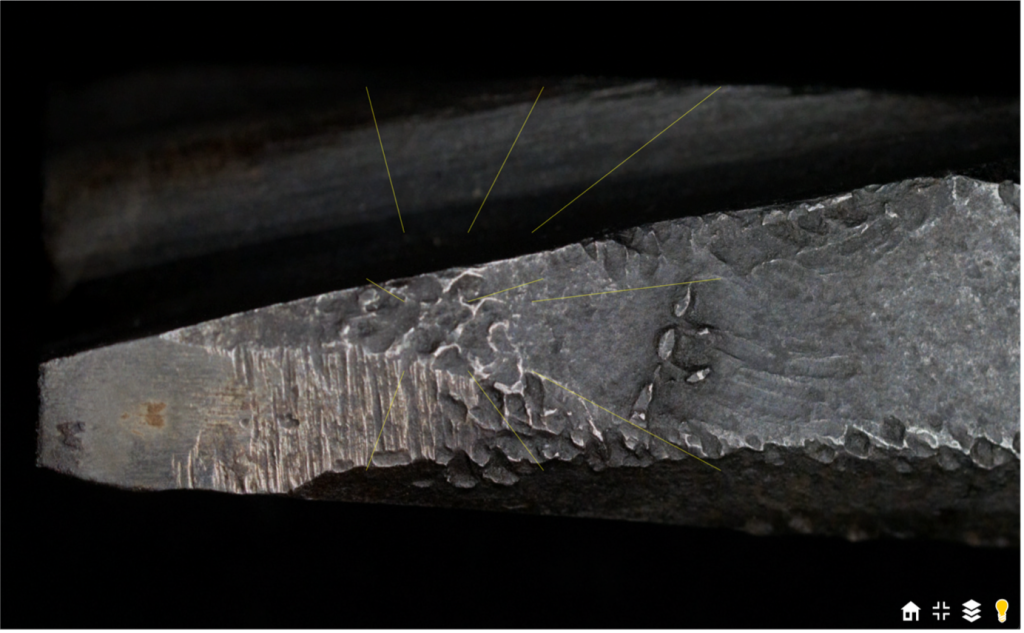
Traditional photography can’t always capture the fine textures and wear on these tiny objects. RTI allows us to digitally “relight” the surface from different angles, revealing details like scratches, rust, and engraving marks that are invisible under normal lighting.
Challenges and Solutions
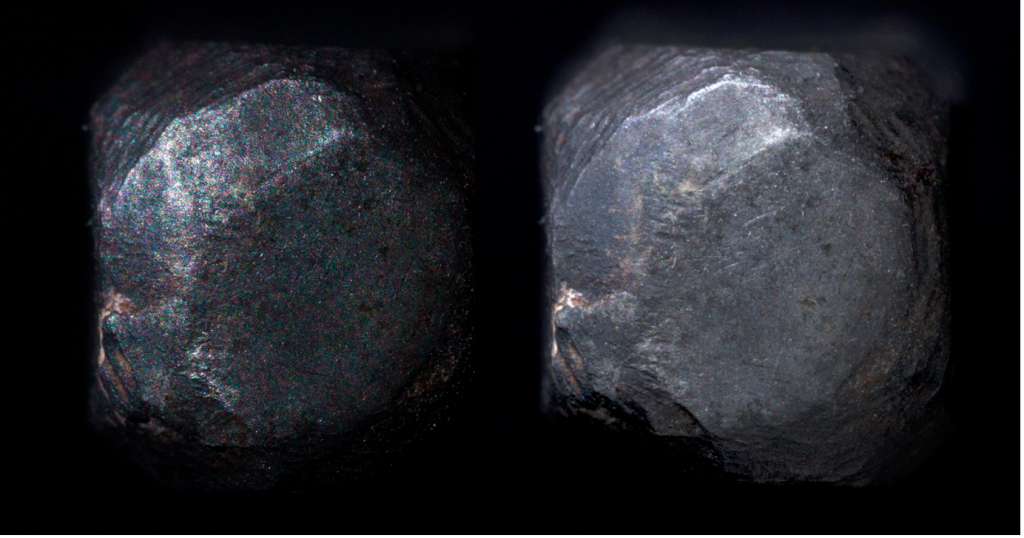
Early tests showed unwanted colour artifacts due to reflections. These were resolved by adjusting camera settings and relying on RTI’s built-in corrections. The shiny surfaces of the punches posed a challenge, but RTI’s “Hemispherical Harmonics” algorithm helped balance the highlights. A consistent setup was developed to ensure every punch was photographed in the same way, improving accuracy and efficiency.
Key Discoveries
RTI revealed subtle textures and markings, including maker’s stamps and signs of wear, helping researchers understand how the punches were made and used. Thanks to advanced algorithms, RTI can reduce glare and highlight surface details without needing special polarising filters. Unlike older methods, RTI retains the natural colour of the metal, giving a more accurate representation of the punch. The processed files can be viewed in a browser, allowing scholars and the public to interactively explore the punches in detail.
What’s Next?
The RTI files are being added to a digital archive, making them accessible for future research and public engagement. This technique is also being explored for other historical objects, proving its value beyond the Baskerville collection.